






By Matt Chlebek, Risk Management Consultant, The Horton Group, a MarshMcLennan Agency
In the construction industry, few numbers influence a contractor’s competitiveness, profitability, and access to work as directly as the Experience Modification Rate (EMR). Sometimes called the experience mod, this factor is used by workers’ compensation insurers to calculate premiums—and it also serves as a widely recognized indicator of a company’s safety culture and risk management practices. For construction contractors, understanding how the EMR works and how it affects business is essential to maintaining both financial health and a strong reputation.
What Is the Experience Modification Rate?
The EMR is a numerical value, usually ranging from 0.50 to 1.50, that compares a contractor’s past workers’ compensation losses to what would be expected for an average company of similar size and type.
- An EMR of 1.00 is considered average.
- Below 1.00 means better-than-average safety performance.
- Above 1.00 indicates worse-than-average losses and higher risk.
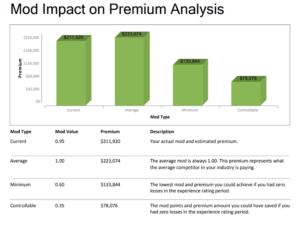
Workers’ compensation premiums are calculated by multiplying the base premium by the EMR. That means even a small change in the experience mod can significantly increase or decrease costs. For example, a contractor with a $200,000 base premium and an EMR of 0.80 would pay $160,000—saving $40,000 annually simply by maintaining a strong safety record.
How EMR Is Calculated
Insurers typically evaluate the past three years of a contractor’s claims history, excluding the current policy year. Both the frequency and severity of claims are factored in; however, smaller and frequent claims often affect the mod more heavily because they indicate systemic safety issues. Larger, catastrophic claims are weighted differently to avoid distorting the calculation.
Payroll and classification codes also play a role. Insurers compare a contractor’s actual losses to the expected losses for companies performing similar work, adjusting for size.
Why EMR Matters in the Construction Industry
1. Financial Impact on Insurance Costs
Workers’ compensation insurance is one of the largest expenses contractors face. An elevated EMR can increase premiums by tens or hundreds of thousands of dollars annually. For a contractor operating on tight margins, these extra costs can quickly erode profitability.
2. Ability to Bid on Projects
Many general contractors, municipalities, and large private clients require bidders to maintain an EMR of 1.0 or lower. Some go even stricter—0.90 or below. A high EMR can disqualify a contractor from even submitting a bid, eliminating access to lucrative public and commercial projects. In this sense, the EMR functions not only as an insurance metric but also as a gateway to market opportunities.
3. Reputation and Client Confidence
Contractors with low EMRs are often viewed as safer, more reliable, and more professional. Clients and project owners want to avoid jobsite delays, injuries, and regulatory issues. A low EMR signals that a contractor prioritizes training, hazard prevention, and accountability—all essential for efficient project delivery.
4. Impact on Workforce Morale and Retention
A strong safety record supported by a low EMR boosts employee confidence and morale. Workers feel more valued when they see their employer investing in safe practices, leading to better retention and potentially lower turnover-related costs.
5. Impact Premium Cost vs. Profit Margin
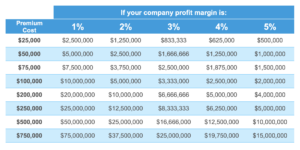
Based on your company’s profit margin, this chart illustrates how much additional premium you are paying impacts the amount of profit you would need to make to offset it.
How Contractors Can Lower Their EMR
Improving the EMR requires a proactive approach to safety management, including:
- Comprehensive employee training and onboarding
- Job hazard analysis and regular safety audits
- Prompt reporting and management of injuries
- Return-to-work programs to reduce claim severity
- Root-cause analysis for every incident
- Strong supervision and safety leadership on-site
If your organization is interested in a free consultation, we would be happy to provide insight into how your company’s mod is calculated based on your specific losses, and offer resources and partnership to improve your EMR.