







By Patrick Donovan, Safety Director, Northcentral Construction
Winter is not just a chilly season; it has significant effects on the human body, particularly the effects of cold weather on the human body. Your understanding of these effects and how to combat them can be lifesaving.
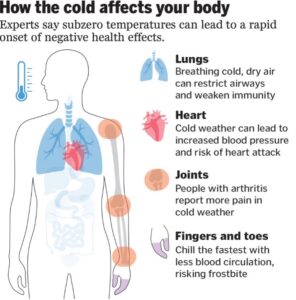
Exposure to cold weather affects body temperature, circulation, respiratory health, and more. Cold temperatures can cause problems for asthma sufferers. Cold, dry air causes the air passages in the lungs of some asthma sufferers to contract, making it difficult to breathe.
When the temperatures drop, our bodies spring into action with a series responses designed to keep us warm and functioning. The two main physiological reactions to cold exposure are peripheral vasoconstriction and shivering. Vasoconstriction (narrowing of blood vessels to slow or block blood flow) is the body’s way of redirecting blood flow from the extremities to the vital organs creating a protective core of warmth. This is why our fingers and toes often feel the chill first – they are the first place we feel our body’s battle against the cold.
 Shivering, on the other hand is our bodies way of generating heat through rapid muscle contractions. It’s an involuntary response that can increase our metabolic rate and heat production significantly. The effectiveness of this varies from person to person. We all experience cold weather differently. Body shape, mass, and the ratio of body area to body mass all play a role in how quickly we lose heat in cold environments. If you are tall, you tend to become cold faster than a shorter person. Taller people have a bigger surface area; meaning heat is lost from the body quicker. Those with a higher percentage of subcutaneous body fat tend to be better insulated against the cold.
Even though we all react differently to cold weather we are very adaptive and as we face prolonged exposure to cold temperatures, our bodies can adjust over time a process known as cold acclimatization. This can lead to less shivering and cold-induced vasoconstriction responses. Our bodies become more efficient at dealing with the cold, which is why people who live in colder climates often seem less bothered by winter weather than those from warmer regions.
One critical factor that’s often overlooked is wind chill. The windchill number is more important than the temperature on the thermometer when it comes to how cold we feel. It determines the ‘feels-like’ temperature and can cause exposed skin to freeze in as little as 30 minutes in extreme conditions. Wind Chill increases the rate of heat loss from any exposed areas of skin and can lead to dangerous situations like frost bite or hypothermia.
During the cold weather months many factors come together to create an environment that, if not taken seriously, can have drastic consequences. Understanding the intricacies of how our body heat and body temperature react to cold conditions, cold weather, and freezing temperatures is key to maintaining comfort and safety during the winter months. Watch the temperatures, take precautions, dress appropriately and maintain a healthy intake of nutrition and hydration and you can navigate through the cold winter weather successfully.